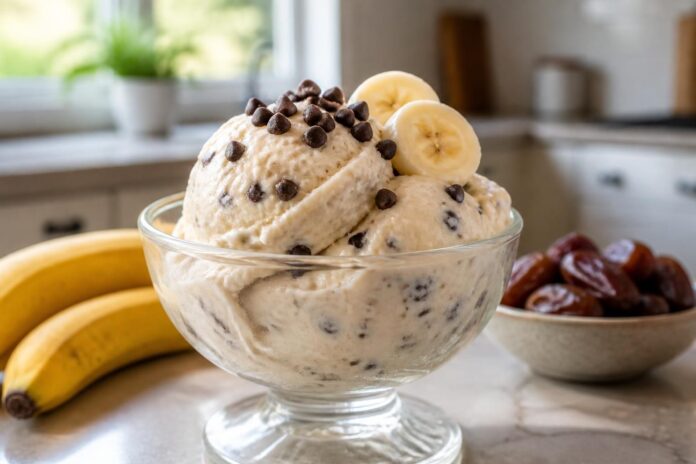
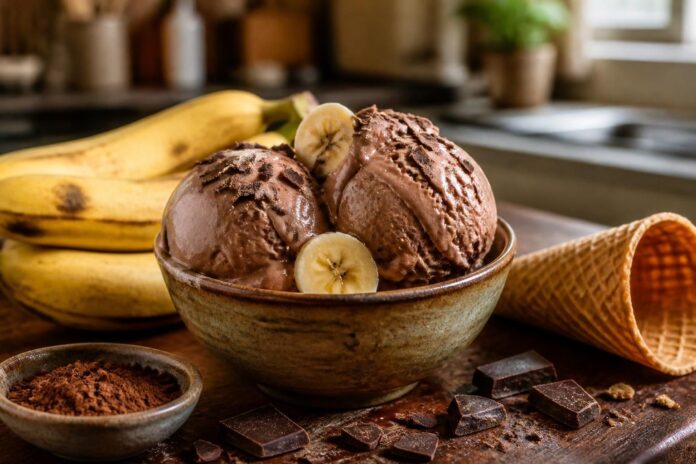
This homemade banana date ice cream is a simple frozen dessert made with ripe bananas, soft dates, thick yogurt or cream, and chocolate chips. A food processor turns the frozen fruit into a thick, creamy mixture—no ice cream maker required.
Enjoy it straight from the processor as soft serve, or freeze it until firm enough to scoop. It’s an easy way to make a cold treat at home using a handful of familiar ingredients.
Why You’ll Love This Recipe
- Simple ingredients: Bananas, dates, yogurt or cream, and chocolate chips make the base.
- No ice cream maker: A food processor does the blending.
- Easy to customize: Adjust the chocolate chips or add your favorite toppings.
- Two ways to serve: Enjoy it soft and creamy right away or freeze it for firmer scoops.
Ingredients
- 4 ripe bananas, peeled, sliced, and frozen
- 6 soft dates, pitted
- ½ cup thick plain yogurt or cream
- ¼ cup mini chocolate chips
- A small splash of milk, only if needed to help the mixture blend
Choose soft, moist dates so they blend more easily. If your dates are firm, soak them in warm water for about 10 minutes, then drain them before using.
How to Make Banana Date Ice Cream
1. Freeze the bananas
Peel and slice the bananas into coins. Arrange them in a single layer on a parchment-lined tray and freeze until solid, usually several hours. Once frozen, transfer the slices to a sealed container or freezer bag if you’re not making the recipe right away.
2. Add the ingredients to a food processor
Place the frozen banana slices, pitted dates, and yogurt or cream in the bowl of a food processor. Make sure the dates are pitted before adding them.
3. Blend until creamy
Blend in short pulses at first, then continue blending until the mixture is thick and smooth. Stop occasionally to scrape down the sides with a spatula. If the mixture is too firm to move, add milk a little at a time—just enough to help the blades turn.
4. Add the chocolate chips
Fold in the mini chocolate chips with a spoon or spatula. You can pulse the processor briefly if you’d like the chips more evenly distributed, but avoid blending them completely into the mixture.
5. Serve or freeze
For a soft-serve texture, spoon the ice cream into bowls and serve immediately. For firmer scoops, transfer it to a freezer-safe container, smooth the top, cover, and freeze for about 2 to 3 hours.
If the ice cream becomes very firm in the freezer, let it sit at room temperature for a few minutes before scooping.
Tips for Creamy Results
Freeze the banana slices in a single layer. This helps keep them from freezing into one large clump and makes them easier to process.
Use ripe bananas. Bananas with brown speckles are usually sweeter and have a stronger banana flavor than underripe ones.
Blend in stages. Frozen fruit can be hard on a food processor. Start with short pulses and pause to scrape down the sides rather than running the machine continuously.
Add liquid gradually. Too much milk can make the mixture loose. Add only a small splash if the processor needs help blending.
Let firm ice cream soften slightly before serving. A few minutes at room temperature makes it easier to scoop.
Variations
- Chocolate version: Add a tablespoon of unsweetened cocoa powder before blending.
- Nutty version: Sprinkle chopped walnuts, almonds, or pecans over each serving.
- Cinnamon version: Add a pinch of ground cinnamon to the processor.
- More chocolate: Replace the mini chips with finely chopped dark or milk chocolate.
- Dairy-free option: Use a thick, unsweetened plant-based yogurt or a suitable dairy-free cream alternative.
How to Store It
Store leftover ice cream in an airtight, freezer-safe container. Press a piece of parchment or reusable wrap gently against the surface before covering to help limit air exposure. For the best texture, enjoy it within about one week.
The mixture will freeze more firmly than traditional churned ice cream. Let it soften briefly at room temperature before scooping, and avoid repeatedly thawing and refreezing the whole container.
Frequently Asked Questions
Can I make this without a food processor?
A powerful blender may work, but you may need to stop and scrape down the sides frequently. Follow your appliance’s instructions for blending frozen ingredients, and add liquid only as needed.
Can I make it without dates?
Yes. You can leave the dates out, though the ice cream will be less sweet and won’t have the same date flavor. Taste the mixture before serving and adjust the toppings to your preference.
Can I use fresh bananas instead of frozen?
Frozen bananas are important for the thick, chilled texture. Fresh bananas will make a softer mixture. Slice and freeze them first for the best result.
Why is my mixture not blending?
The banana pieces may be too large or frozen into a solid clump. Use smaller slices, pulse the processor, and pause to scrape down the sides. A small splash of milk can help, but add it gradually.
Can I prepare it ahead of time?
Yes. Prepare the mixture, place it in a covered freezer-safe container, and freeze it until you’re ready to serve. Let it soften for a few minutes before scooping.
Easy Banana Date Ice Cream Recipe
Prep time: 10 minutes, plus time to freeze the bananas
Additional freezing time: 2 to 3 hours for firmer scoops
Yield: About 4 servings
Ingredients
- 4 ripe bananas, sliced and frozen
- 6 soft, pitted dates
- ½ cup thick plain yogurt or cream
- ¼ cup mini chocolate chips
- A small splash of milk, if needed
Instructions
- Add the frozen banana slices, dates, and yogurt or cream to a food processor.
- Blend in short pulses, stopping to scrape down the sides as needed.
- Add a small splash of milk if the mixture is too thick to blend.
- Fold in the chocolate chips.
- Serve immediately for a soft-serve texture, or cover and freeze for 2 to 3 hours for firmer scoops.
- Let firm ice cream sit at room temperature for a few minutes before serving.
This banana date ice cream is an easy homemade dessert to keep in your freezer for warm days, snack time, or whenever you’re in the mood for something cool and creamy.